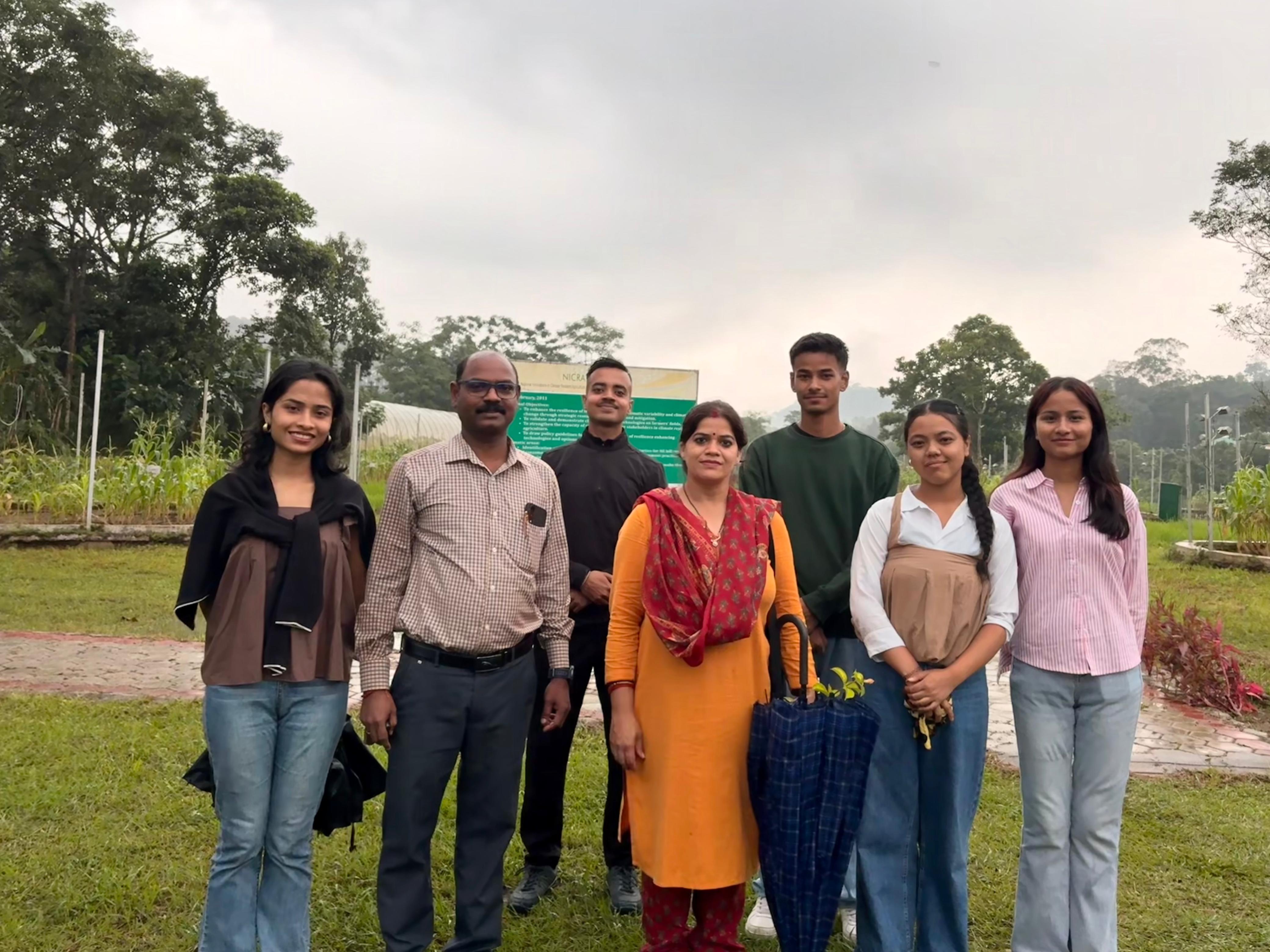
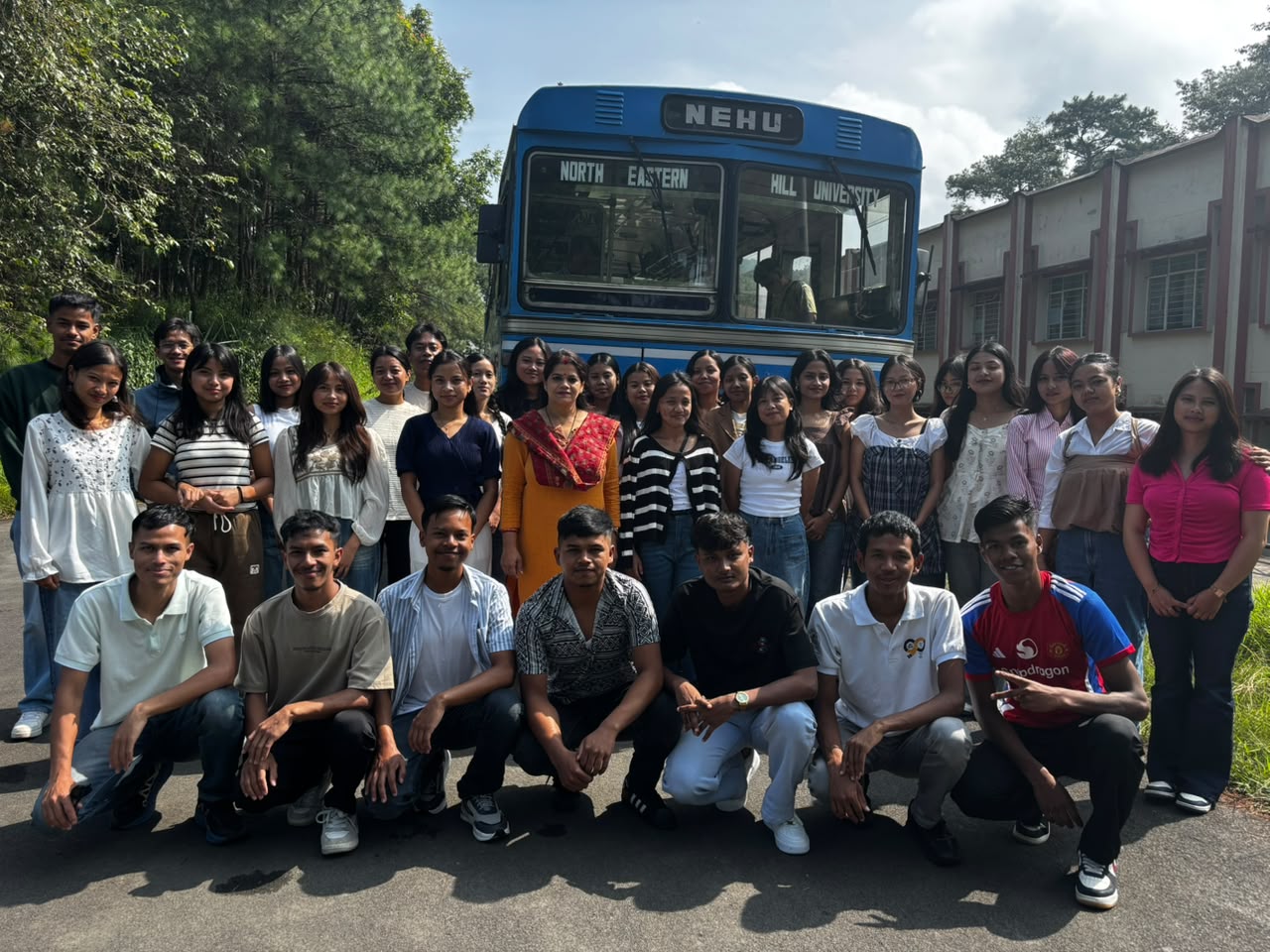
A one-day educational trip to ICAR (NEH) Region was organized by Department of Geography, NEHU under the supervision of Dr. Chandrakanta (visit in-charge). Special thanks to the Head- Prof P. K. Ryngnga, Department of Geography (NEHU) for understanding the need of the students and encouraging the students for this educational visit.
The students e visited the ICAR Research Complex for North Eastern Hill (NEH) Region, Umiam, Meghalaya, to gain practical knowledge about agricultural practices, organic farming, horticulture, livestock management, poultry farming and modern agricultural machinery. The visit provided an opportunity to observe various farming activities directly and to understand how scientific techniques are applied to improve agricultural production and promote sustainable farming in the North-eastern region.
During the visit, we first observed the agricultural fields where organic and sustainable farming practices were followed. Different crops such as soyabean, groundnut and millet were grown in the fields. We learned about their cultivation and management practices. Millet was particularly interesting because it is a hardy crop that does not require intensive care and can be maintained with comparatively fewer inputs. This makes it suitable for sustainable farming.
We also observed a kitchen garden, where a variety of vegetables were cultivated, including cabbage, cauliflower, chillis, okra, beans, spinach, onions and bottle gourd, among others. Some vegetables were grown under plastic-covered structures to protect them from rain and other adverse weather conditions. This demonstrated the importance of protected cultivation for maintaining vegetable production under changing weather conditions.
In the same farming unit, we observed duck rearing and cattle rearing. Ducks were maintained in a separate shed, and we learned about their management as a part of an integrated farming system. We also observed cows being reared mainly for milk and dairy products. The integration of crops and livestock helps in the efficient utilization of farm resources and also provides different sources of agricultural income.
We were also shown the preparation and use of organic manure and vermicompost. Fresh cow dung was allowed to dry and was used as organic fertilizer. Earthworms were then introduced into suitable decomposable organic material. The earthworms help in breaking down the organic matter and produce vermicompost, which can be used as a nutrient-rich organic manure. This demonstrated how animal waste can be recycled and utilized in agricultural fields.
After this, we visited the horticulture section, where we observed fruit crops such as local mandarin and guava. The guava plants were comparatively short but produced a large number of fruits. We were also introduced to the process of grafting in guava. In grafting, a suitable plant portion is cut and joined and then secured using grafting plastic. We learned that grafting can help in propagating desirable characteristics and improving fruit production. We were also informed about the possibility of combining desirable characteristics through plant propagation and breeding techniques.
The next part of the visit was the poultry and chick-rearing unit. Before entering the poultry farm, we were asked to sanitize our footwear by placing our shoes in a potassium permanganate solution as a biosecurity measure to prevent the spread of infections. Inside the unit, we observed different poultry varieties, including Srinidhi, Kadaknath and Vanaraja. Srinidhi is an improved rural poultry variety and can produce around 150 eggs per year under backyard conditions. Kadaknath is a black-coloured indigenous bird of Madhya Pradesh, known for its black meat and high market demand, and it produces around 110 eggs per year. Vanaraja is an improved dual-purpose variety used for both meat and egg production. It is comparatively larger in size and can produce around 150 eggs per year.
Finally, we visited the agricultural machinery section, where different machines and implements used in cultivation were demonstrated. We observed tractors and equipment used for land preparation, sowing and planting. Rice-transplanting machinery was also demonstrated, which places rice seedlings in rows at regular spacing. Other seeders, planters and power-operated agricultural implements showed how mechanization can reduce labour requirements and improve the efficiency of farming operations.
Overall, the visit was an informative and valuable learning experience. It provided practical knowledge about crop cultivation, integrated farming, organic manure and vermicomposting, horticulture, grafting, livestock and poultry management, and agricultural mechanization. It helped us understand the practical application of agricultural techniques and the importance of sustainable and scientifically managed farming for the development of agriculture in the North Eastern region.
Thanks to transport office NEHU for arranging bus for the visit and special thanks to all the students’ volunteers (Department of Geography-NEHU) who have been helpful throughout the visit.







2026, North-Eastern Hill University
Designed & developed at Bioinformatics Centre, NEHU